
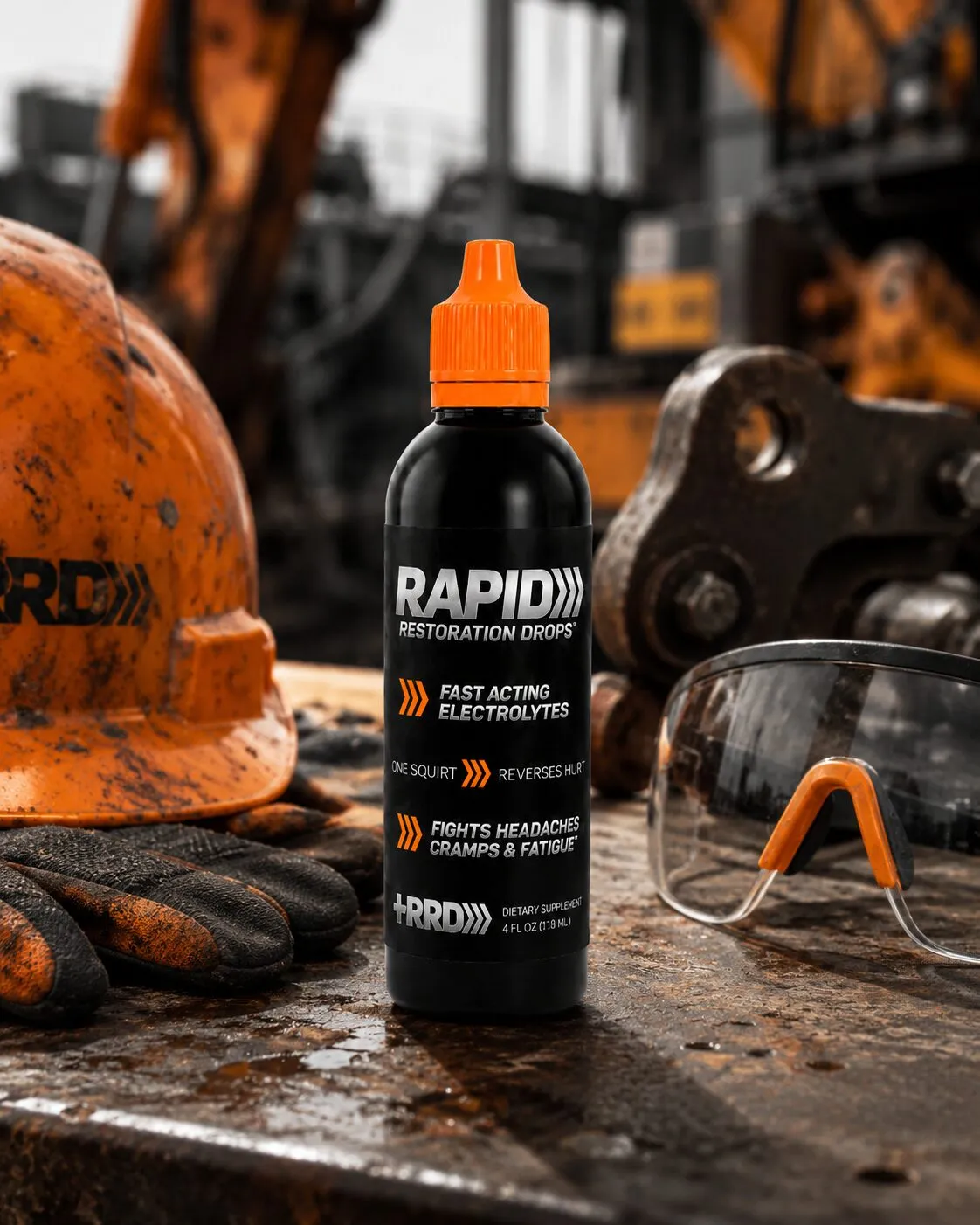
How do I dose Rapid Restoration Drops?
Follow the label. The Supplement Facts panel gives the suggested use, and this page repeats it word for word:
SUGGESTED USE: Emergency support*: Add 1 tsp to a few ounces of any liquid. Follow with additional fluids. Repeat as needed. Daily support*: Add ½ tsp, (just a squirt), to any liquid and use throughout the day to restore hydration and support endurance.*
What is the difference between daily and emergency use?
Daily support is a small amount in your drinks all day. Emergency support is one larger dose in a few ounces of liquid, followed by more fluids. JMAR calls these proactive and reactive use. Both follow the label above.
| Use | Label directions |
|---|---|
| Daily support | Add ½ tsp, (just a squirt), to any liquid and use throughout the day |
| Emergency support | Add 1 tsp to a few ounces of any liquid, follow with additional fluids, repeat as needed |
Emergency support is not emergency care. Heat stroke is a 911 emergency. See the emergency protocol.
How do I mix for a whole crew?
Put the bottle next to the drink dispenser and let each worker add their own dose to their own cup or bottle. Single-serve packets work for crews on the move. See the shop for sizes. Ask JMAR through a demo about bulk setups for your site.
How should I store the drops?
JMAR says salt and minerals are naturally stable compounds that do not break down or spoil. It says minerals do not support bacterial growth and that expiration dates appear only because of packaging regulations. Read the package for dates and storage directions. JMAR also says no refrigeration is required.
Where should I stage the drops on site?
Place the drops where crews can reach them in seconds. JMAR lists these access points:
- Portable in tool bags
- At hydration stations
- Stored in work vehicles
- Stocked in first aid stations and kits
- In individual worker bottles
- Flexible placement based on site needs
How do the drops fit our safety protocols?
Daily: add them to the beverages workers drink through the day. When a worker feels depleted: use the emergency support label directions, follow with more fluids, and monitor for improvement. If a worker does not improve, or you suspect heat stroke, call 911.
Pair this with a plan for water, rest and shade, acclimatization and the jobsite hydration plan.
Need help putting this in place?
JMAR will help with custom protocols for your work environment. Read the implementation overview or the getting started page.
Next step
Request a demo and JMAR will walk your crew through use, or ask for a free sample.