
What do I do first in a heat emergency?
Call 911 if you think a worker has heat stroke or any medical emergency. Stay with the worker. Rapid Restoration Drops are a dietary supplement. They are a safeguard, not a substitute for emergency care. Learn the difference in heat exhaustion vs heat stroke.
What are JMAR’s three steps for early signs?
For early signs such as weakness, dizziness or cramps, JMAR’s protocol has three steps. Use them alongside your site’s own heat plan and emergency procedures. Call 911 if a worker gets worse.
- Replace lost electrolytes. Take a concentrated shot. Use the label: Emergency support: Add 1 tsp to a few ounces of any liquid.
- Follow with fluids and rest. JMAR says to rest for 10 to 15 minutes while adhering to OSHA heat stress guidelines. Follow with additional fluids.
- Monitor for results. Repeat as needed, per the label, if the worker still feels depleted. JMAR also suggests daily use in any liquid for ongoing hydration.
Why does JMAR keep drops close to the crew?
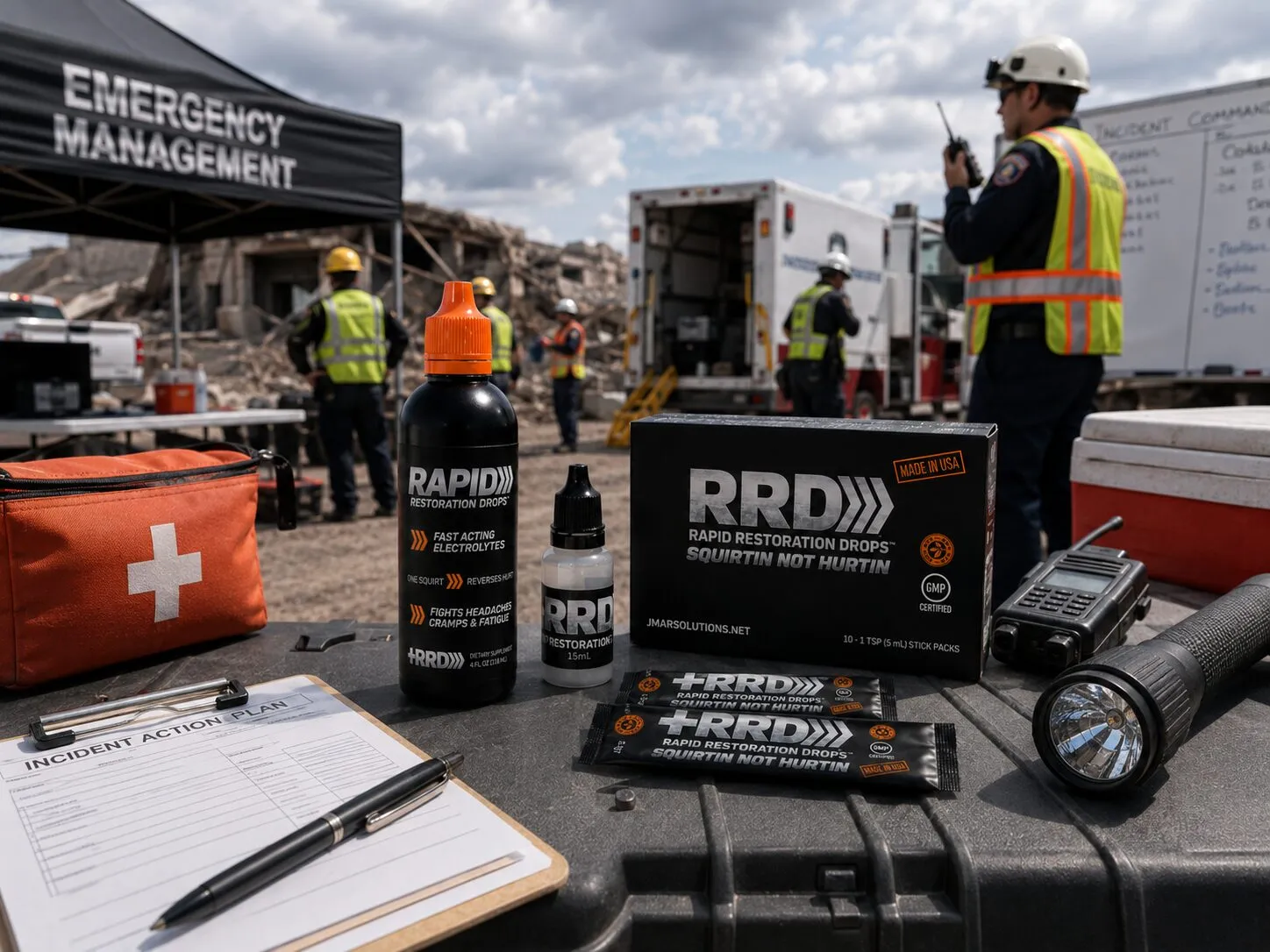
When a worker shows weakness, confusion, dizziness or cramps, every minute counts. JMAR says plain water or waiting on a sports drink can be too slow, and that the drops give a quick electrolyte replacement. Stage the drops in trucks, tool bags and first aid kits so a supervisor can act at once.
JMAR says the drops help the body absorb fluids and help reduce muscle cramps, headaches and fatigue. They do not treat heat stroke. See heat illness for signs and responses.
When do minutes matter most?
JMAR lists these situations: extreme fatigue, severe dehydration, heat-related emergencies and critical response needs. In each one, start with your site’s emergency plan and 911 if needed.
| Situation | First action | Then |
|---|---|---|
| Suspected heat stroke | Call 911 | Follow your emergency plan |
| Cramps, weakness, dizziness | Stop work, move to shade | Label emergency support dose, fluids, rest |
| Extreme fatigue | Stop work, check the worker | Label dose, fluids, monitor |
How do I get the drops for my crew?
See the 4 oz bottle on the product page, or read how to roll out the drops across your sites.
Next step
Protect your team: request a demo and we will help you stage the drops and write the plan.